Cart
0
The Executive's Fabric Advantage: Why Italy Leads
Why Italian Fabrics Define the Gold Standard for Executive Suits
The difference between an adequate suit and one that commands authority begins before the needle touches cloth. It starts with fabric—specifically, with the mills of Italy that have refined textile production into both art and engineering. When you step into a boardroom wearing a suit tailored from premium Italian fabrics, people notice something you may not: the way the fabric moves with you, the way it holds its shape after eight hours, the subtle finish that signals uncompromising standards. This isn't about status symbols or conspicuous consumption. It's about wearing something that performs as hard as you do.
For high-achieving professionals, the right fabric is infrastructure. It supports your presence. It eliminates the mental friction of adjusting, tugging, or worrying about fit throughout the day. Italian fabrics deliver this consistency because Italian mills have spent generations solving problems that off-the-rack manufacturers ignore: how to balance weight and drape, how to select fibers that breathe in summer yet insulate in winter, how to weave textiles that look sharp in month twelve as they did in month one.
Italy produces roughly 30 percent of the world's premium suit fabrics, and that leadership stems from geography, expertise, and obsession with details others overlook.
The Italian textile industry concentrates in regions like Biella, Como, and Prato, where mills sit within a few hours of one another. This proximity created knowledge networks that span centuries. Master weavers apprentice under mentors who learned from their predecessors. Machinery is maintained with precision that borders on ritualistic. Dye lots are tested and retested. Fiber sourcing is controlled with the discipline of a pharmaceutical supply chain. When you buy fabric from a major Italian mill, you're not buying from a vendor; you're buying from an institution.
Beyond process, Italian fabrics perform at a level that justifies their premium. They hold color better than most alternatives, thanks to advanced dye techniques and superior fiber preparation. They resist pilling and maintain their weave integrity through repeated wear and cleaning. The hand feel—the tactile quality when you run your palm across the cloth—conveys quality immediately. This isn't marketing. It's physics and chemistry working correctly.
For the executive who has outgrown off-the-rack options, Italian fabrics solve a core frustration: synthetic blends, substandard fiber preparation, and cost-cutting in construction mean most ready-made suits lose their shape and finish within a season. Premium Italian textiles resist that decline. They're an investment that ages gracefully rather than deflates. When you recalibrate your wardrobe through a custom process anchored in Italian materials, you're building pieces that work harder and last longer than anything you'll find in a department store.
What to do next: Examine the fabric content of suits you currently own. Note which ones feel substantial, maintain their color after dry cleaning, and still look sharp after a year of regular wear. That tactile and temporal difference points you toward the performance that Italian mills deliver consistently.
Understanding Italian Fabric Heritage and Craftsmanship
The story of Italian fabric excellence isn't recent. Biella became a weaving center in the 1700s, and Como's silk tradition extends back even further. What started as local advantage—access to Alpine water for processing, proximity to merchant routes, early adoption of mechanized looms—evolved into something deeper: a culture that equates fabric quality with personal and national reputation.
Italian textile workers don't optimize for speed the way some global competitors do. They optimize for consistency and finish. A mill might run a loom at a slightly slower pace to prevent stress on fibers. They'll stop production to adjust tension by fractions of a millimeter. They conduct color matching under multiple lighting conditions because they understand that a suit viewed under office fluorescents, natural daylight, and evening restaurant lighting needs to behave the same way in all of them.
This approach requires skill, capital investment, and patience. It also produces measurable advantages. Italian super 100s wools (a fineness measurement) typically feature longer staple fibers than comparable materials elsewhere, which translates to fabric that drapes more fluidly and resists pilling more effectively. Italian mills pioneered the soft-finished suit fabrics that dominated executive wardrobes for the past two decades, moving away from stiff, armor-like construction toward pieces that move with the body.
Craftsmanship in Italian mills also means respect for natural variation. Rather than bleaching out the subtle color nuances in wool, premium mills embrace them. A charcoal suit from an elite Italian maker might display slight tonal variations that reveal depth impossible to achieve with flat, uniform color. To the eye, this reads as sophistication. To the production manager, it means accepting a tighter tolerance for waste because every bolt must pass rigorous inspection.
Actionable insight: When you source your next custom suit, ask your tailor about the mill origin and specific finishing techniques. Italian mills typically print mill names and specifications on selvage edges. That transparency reflects confidence in the product and gives you traceability that matters when investing in premium pieces.
The 23-Point Precision Meets Premium Materials
Pairing premium Italian fabrics with a rigorous body analysis amplifies the advantage of each. The precision starts with measurement.
A 23-point body analysis doesn't stop at chest, waist, and inseam. It documents shoulder width, arm length, bicep circumference, wrist diameter, neck girth, torso length, posture angles, and how your body distributes weight when you sit, stand, and move. This data becomes the template for how fabric will drape across your specific frame. A fabric with magnificent hand feel and weave will only reveal its potential when matched to proportions that fit correctly.
Consider the difference: standard tailoring assumes a generic frame and expects the wearer to adapt. Bespoke tailoring with precision measurement expects the suit to adapt to you. Premium Italian fabric makes this adaptation visible and tactile. A fabric with poor recovery will sag and bunch where it shouldn't. A superior fabric holds its intended line, showcasing the precision of the pattern and the accuracy of the fit.
The custom try-on process accelerates this alignment. Rather than ordering a suit blind and hoping the fit lands correctly, you wear a prototype garment constructed in a serviceable fabric. This prototype reveals how the proportions work on your body in motion. If the shoulders sit correctly but the jacket length needs adjustment, that's documented. If the trouser break needs refining, the tailor captures that. Once everything fits perfectly, that precision translates into the final suit in premium Italian materials.

This is where the investment pays compound dividends. You're not just buying a suit made from good fabric. You're buying a suit constructed to dimensions that eliminate fit compromises. The fabric can then do what it's engineered to do: move with authority, hold its shape, and project polish without requiring constant adjustment.
Next step: If you've been relying on tailors who work from standard measurement tables, schedule a consultation focused on body analysis rather than quick alterations. The difference in time investment is minimal; the difference in outcomes is substantial.
Characteristics That Define High-Performance Suit Fabrics
Not all premium fabrics perform equally. Knowing what to evaluate separates informed choices from expensive mistakes.
Fiber content matters intensely. 100 percent wool remains the gold standard for executive suiting because wool fibers naturally resist wrinkles, regulate temperature, and feel refined. Super 100s, 110s, 130s, and 150s grades indicate fiber fineness (measured in microns), with higher numbers reflecting finer, softer feel. For most executives, Super 100s and 110s provide the optimal balance: soft enough to convey luxury, robust enough to withstand regular wear without pilling. Lower micron counts feel softer initially but can appear fuzzy after a few wearings.
Weave density affects durability and appearance. A tightly woven fabric resists snags and maintains its outline. Looser weaves can feel more luxurious initially but may shift or bag over time. Italian mills typically document weave tightness and fiber length, metrics that directly predict longevity.
Finished weight matters for both function and feel. Lighter fabrics (around 250-280 grams per square meter) work for spring and early fall. Mid-weight fabrics (300-320 grams) cover most of the year. Heavier fabrics (340+ grams) suit winter climates but can feel restrictive in warmer months. Understanding your climate and schedule lets you select fabrics that perform optimally rather than requiring constant compromise.
The finishing process separates exceptional fabrics from adequate ones. After weaving, Italian mills apply various treatments: soft finishing (which creates suppleness), water-repellent finishing (which protects without visible coating), and tension control during finishing (which locks in weave stability). These steps take time and cost money, but they're the difference between a suit that looks sharp in month one and one that looks sharp in month twelve.
Color consistency and dye stability reveal production rigor. Premium mills use staggered dye processes and color-match across multiple lighting conditions. This is why Italian suit fabric maintains its visual integrity under the varied lighting of a professional day in ways that cost-optimized alternatives don't.
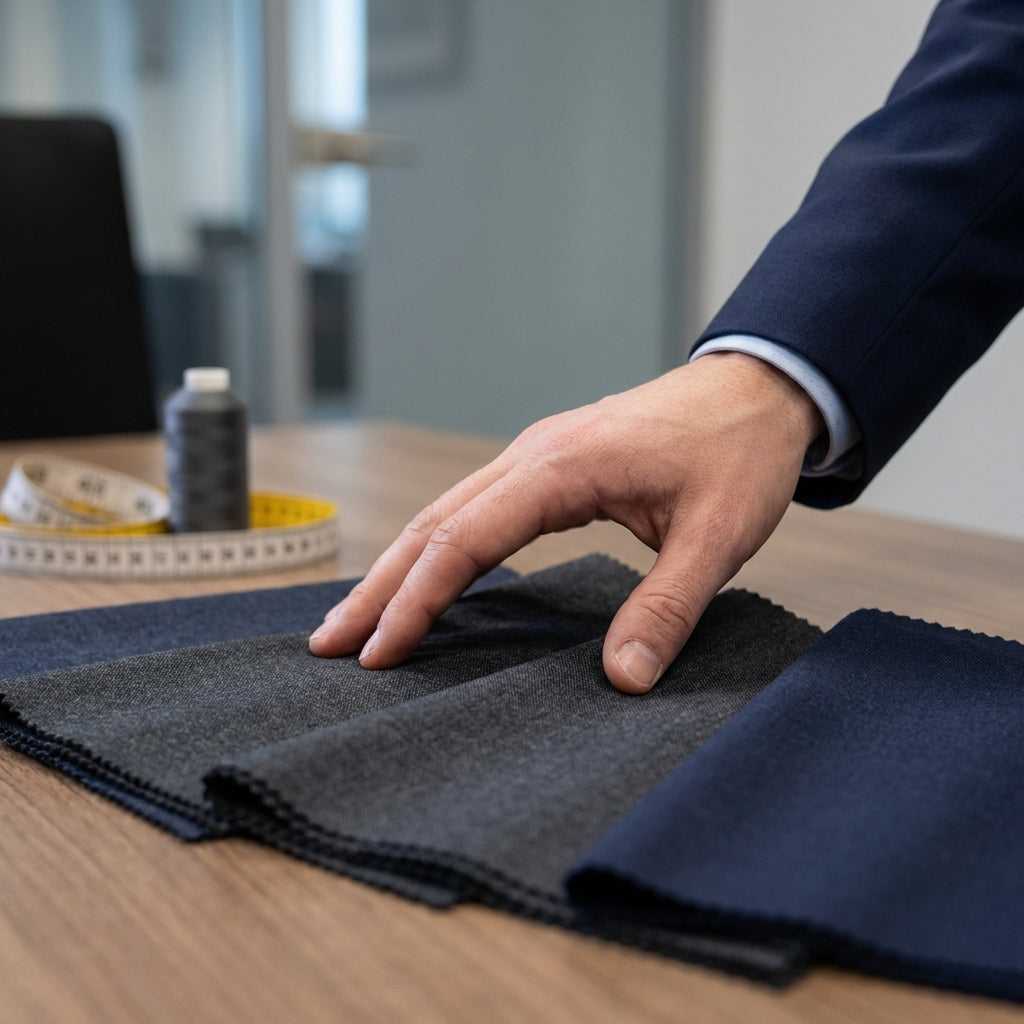
Practical takeaway: Request fabric samples when consulting with a tailor. Hold them under your office lights, natural daylight, and evening lighting. Feel the hand, assess the weave density by looking at the fabric against a light source, and note how the color shifts. This tactile evaluation takes five minutes and clarifies what you're investing in.
Italian Mills: Where Luxury and Function Converge
Several Italian mills have achieved near-legendary status among tailors and discerning professionals: Loro Piana, Vitale Barberis Canonico, Zegna, Dormeuil, and Ermenegildo Zegna's heritage mills each represent different strengths within the premium segment.
Loro Piana built its reputation on sourcing and processing excellence. They control the supply chain from grazing pastures to finished bolt, which allows unprecedented consistency. Their Storm System fabrics incorporate water-repellent properties without visible coating, a technical achievement that matters for executives who can't afford to worry about weather. Their fabrics are priced accordingly, but the performance justifies the cost for professionals who need absolute reliability.
Vitale Barberis Canonico represents accessible excellence. Founded in 1932 in Biella, they've maintained serious standards while remaining more price-flexible than ultra-luxury makers. Their fabrics offer remarkable consistency and finish quality at a point that professional tailors can justify to discerning clients. They're a reliable anchor for bespoke suiting programs that balance luxury with economic sense.
Zegna and their affiliated mills focus on innovation. They experiment with blends (merino-silk, merino-linen) that expand functional possibilities while maintaining the performance of pure wool. Their Trofeo line delivers exceptional value; their Elite line represents pure luxury. Both maintain the precision and consistency that Italian production standards demand.
Ermenegildo Zegna's heritage mills produce some of the world's finest suiting fabrics. Their barathea weaves and sharkskin patterns are industry references for precision and sophistication. They're priced at the absolute premium level but remain the choice for executives who want uncompromising materials matched with uncompromising fit.
When you commission a bespoke suit, your tailor's access to mill inventory matters significantly. Donovan England and comparable premium tailoring firms maintain relationships with multiple mills, which means your choices aren't limited to whatever a single supplier had in stock. This access translates directly into options that align with your preferences, climate, and visual preferences.
The mill behind your fabric also predicts longevity. A suit in Loro Piana or Zegna fabric will outperform a suit in an unknown mill's equivalent-grade fabric by several years. This isn't snobbery; it's observable fact rooted in production standards, fiber sourcing discipline, and finishing rigor.
Actionable step: Ask your tailor which mills they work with and why. A knowledgeable tailor can articulate the specific advantages of each mill they recommend, which signals that choices are data-driven rather than arbitrary.
Fabric Weight, Weave, and Wearing Authority

The physics of how fabric interacts with your body determines whether a suit conveys polish or uncertainty.
Weight directly influences drape and movement. A 250-gram fabric moves with fluidity; it responds to your body's motion and settles into elegant lines. A 350-gram fabric holds more of its intended shape independently; it has presence and structure. For summer suits, lighter weight prevents excess heat and allows air circulation. For winter, heavier weight provides insulation and a sense of substance that aligns with season-appropriate expectations.
Weave structure affects both appearance and function. A plain weave (alternating under-over pattern) provides clean simplicity. A twill weave (diagonal pattern) conveys subtle texture and additional durability. A herringbone or houndstooth weave creates visual interest without appearing decorative. The weave you select affects which occasions and seasons the suit serves effectively. A sharp herringbone works for variety in your rotation; a plain weave navy serves as reliable baseline across contexts.
The relationship between weight, weave, and body is where precision measurement becomes essential. A lightweight herringbone fabric draped over properly proportioned shoulders creates an impression of effortlessness. The same fabric on shoulders that are too narrow or too wide for the pattern immediately reads as off. This is why the 23-point body analysis precedes fabric selection in a rigorous bespoke process: proportions determine whether a fabric's characteristics enhance or diminish your presence.
Italian mills publish detailed specifications about weight and weave because they understand this interaction. You're not selecting fabric in isolation; you're selecting fabric for a specific body and specific occasions. The mills that serve serious tailors provide enough technical information for informed choices rather than marketing-driven ones.
What to consider: Think about how long you plan to wear this suit and in what seasons. A suit worn year-round needs mid-weight fabric and a versatile weave. A suit reserved for winter presentations can lean into heavier weight and richer texture. A suit built for summer travel needs to be light enough that a full day of wear doesn't feel restrictive. These parameters drive fabric selection far more than trend or price.
Seasonal Considerations for Year-Round Executive Confidence
Your wardrobe doesn't need to transform seasonally, but your suit fabrics should acknowledge climate realities.
Spring and early fall suit fabric typically ranges from 260-300 grams. These weights provide enough structure to look tailored without trapping heat. Lighter yarns and open weaves (still tight enough for durability, but less densely packed than winter fabrics) keep you comfortable in variable conditions. Colors in this range favor subtle tones: mid-greys, warm taupes, navy, and charcoal with slight texture provide visual interest without appearing seasonal.
Summer suiting demands thoughtful choices. A 240-260 gram fabric in linen blends, wool-silk combinations, or high-twist pure wools handles heat without looking thin or cheap. Lighter colors naturally perform better (cream, light grey, pale blue), though a properly constructed navy in lightweight fabric remains appropriate. Italian mills excel at summer suiting because they've perfected fibers and finishes that breathe without sacrificing structure.
Winter suits benefit from heavier fabrics (320-380 grams) that provide insulation and visual presence. Richer colors dominate this season: deep charcoal, navy, burgundy, and olive. Textured weaves (herringbone, twill, houndstooth) add visual dimension when natural light is lower. These suits can serve double duty: formal evening wear paired with their function as reliable professional garments.
The mistake many executives make is building seasonal extremes when a thoughtfully curated year-round rotation requires fewer pieces. Three suits in mid-weight fabrics, properly tailored and in versatile colors, serve most climates year-round. Supplementing with one lighter weight suit and one heavier option covers seasonal transitions. The Italian fabrics that populate this rotation provide the consistency and performance that allows this efficiency.
Fabric choice also affects cleaning frequency and longevity. Quality wool resists odor and staining better than synthetic blends. Premium finishes resist water spotting and minor damage. Italian fabrics, selected and finished correctly, require less frequent cleaning, which in turn extends their lifespan and keeps colors richer longer.
Practical guidance: Map your annual schedule. Note which months involve the most suit wearing, what climates you'll navigate, and whether you attend formal events seasonally. This inventory drives fabric weight and fiber content selection rather than assumptions about what you should own.
The Custom Try-On Process with Premium Italian Textiles
The power of custom tailoring fully reveals itself when you integrate premium fabrics into a try-on process.
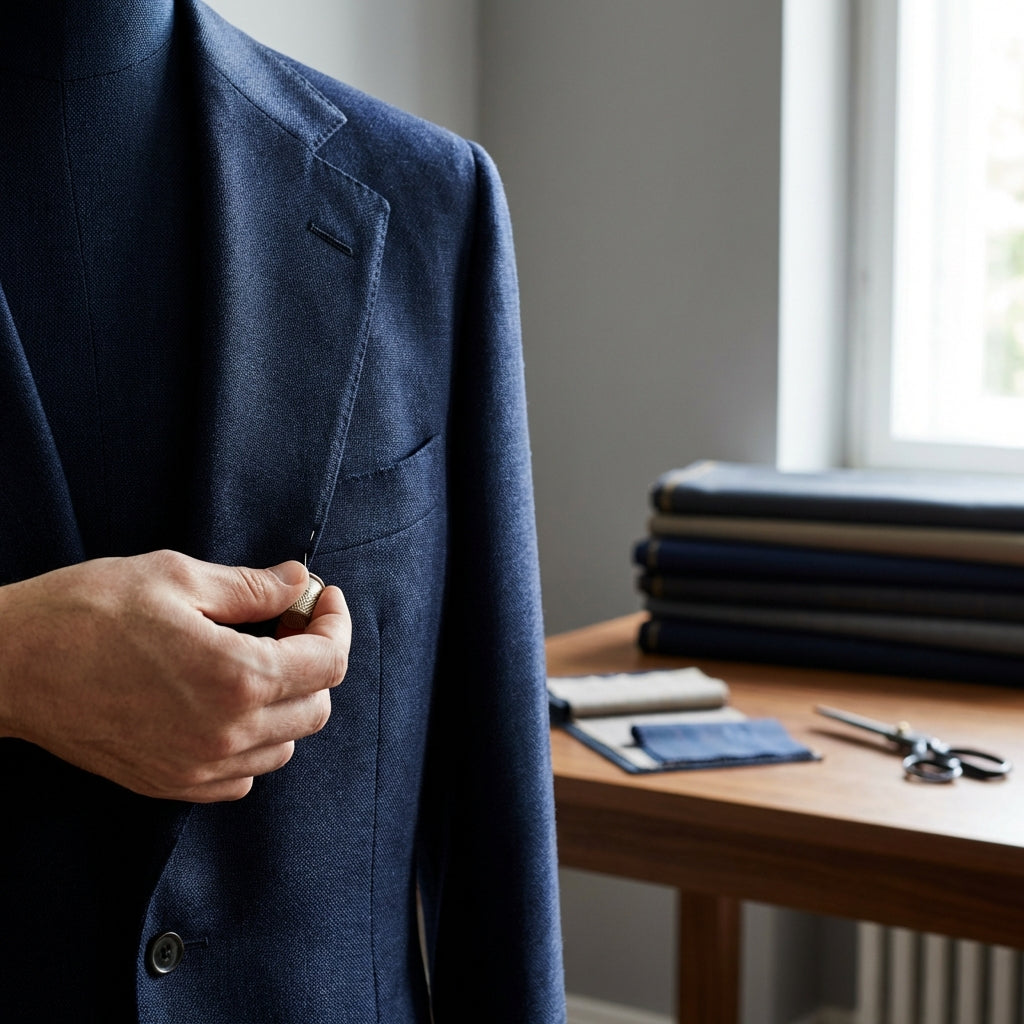
After initial measurements and analysis, your tailor constructs a prototype garment (called a canvas or muslin test suit) in an inexpensive fabric. This prototype isn't pretty; it's functional. It serves a single purpose: revealing how the pattern, proportions, and fit work on your specific body. You wear this prototype through a normal day. You sit in meetings. You reach for items. You move and rest and gesture. The tailor observes how the jacket settles on your shoulders, whether the trouser break lands correctly, whether armholes sit comfortably at the limits of your range of motion.
Adjustments flow from observation, not assumption. If the jacket pulls slightly across your back at the shoulder blade, the pattern adjusts. If the trouser waist requires a half-inch modification, that becomes instruction for the final garment. These refinements might seem minor, but they're the difference between a suit that fits and a suit that fits perfectly.
Once the prototype validates proportions, your tailor manufactures the final suit in your selected premium Italian fabric. Now every element aligns: the precision of the pattern, the accuracy of the fit, and the performance of the material. Italian fabrics reward this precision. A poorly constructed suit in premium fabric remains visible as poor construction. A precisely constructed suit in premium fabric becomes invisible in the way it should: you wear it without awareness, without adjustment, without friction.
The custom try-on process also addresses a core tension in bespoke tailoring: how to ensure that the suit you commission will feel correct on your body, not on the tailor's dress form. Premium Italian fabrics have enough stability and recovery that minor variations in sitting and movement don't degrade the silhouette. This means the suit maintains its authority throughout a working day.

This is also where color selection becomes relevant. The custom process allows you to see how Italian fabrics photograph under your office lighting, how they appear in person, and how they interact with your complexion. Instead of relying on swatch cards, you're making decisions with complete information.
Next action: When engaging a bespoke tailor, confirm that their process includes a try-on stage with a prototype garment. This step is non-negotiable for ensuring that your investment in premium materials translates into a suit that performs flawlessly on your body.
Building a Wardrobe That Commands Respect
A single exceptional suit is valuable. A coherent wardrobe of exceptional suits is transformative.
The architecture starts with baseline pieces. Two navy suits in varying weights and textures (one in plain weave for versatility, one in subtle herringbone for interest) serve as anchors. A charcoal suit in mid-weight fabric works across seasons and occasions. These three pieces, constructed precisely to your measurements in premium Italian fabrics, handle roughly 70 percent of professional scenarios. They're not trendy; they're reliable.
Secondary pieces add flexibility. A mid-grey suit broadens neutral options. A burgundy or deep olive suit introduces color without appearing fashionable. A textured navy or charcoal introduces pattern and interest. Each piece should feel intentional rather than accumulated. Italian fabrics, properly selected, age well together. A navy suit from five years ago will pair harmoniously with a charcoal commissioned today because the color families remain consistent across quality mills.
Seasonal supplementation then becomes possible without requiring a complete rotation. One lightweight suit for summer, one heavier suit for winter, and you've covered climate variation while maintaining coherence. The quarterly wardrobe update recommendations that come with serious bespoke tailoring programs help you assess where gaps exist and address them strategically.
This approach eliminates decision fatigue. When you step into your closet, you know that any suit hanging there fits perfectly, performs reliably, and presents authority. You're not managing multiple fits or varying quality levels. You're not second-guessing colors or worrying about whether this particular suit still looks current. You're simply choosing which of your reliable options suits today's schedule and context.
Building this wardrobe intentionally also affects cost per wear. A suit that costs significantly more upfront but lasts eight years and requires no alterations becomes economically efficient compared to suits that degrade after three years and require annual tailoring. Italian fabrics make this math work because they genuinely last longer.
Strategic step: Audit your current suit collection. Identify which pieces you actually wear regularly (these are your baseline pieces). Identify which you avoid (these likely fit poorly or fail functionally). Plan your first bespoke commission to address the biggest functional gap, then build quarterly around that foundation rather than attempting to replace everything at once.
Investing in Quality That Outlasts Trends
The cost of a bespoke suit in premium Italian fabric is substantially higher than off-the-rack alternatives. This isn't accessible to everyone, and that acknowledgment is important. For executives who command significant resources and who will wear these pieces regularly, the economics shift decisively.
A suit in premium Italian fabric, constructed to precise measurements and maintained properly, reliably serves for six to eight years. Some pieces last longer. The fabric resists pilling, color shifts, and structural degradation because the mills that produce it engineered exactly those properties. The tailoring resists seam slippage and stress failure because precision construction doesn't cut corners or assume average proportions will suffice.
Compare this to typical off-the-rack experiences: a suit that fits adequately costs less initially but deteriorates within two to three years. It may fit acceptably in month one but slides toward poor fit as it settles. Cleaning costs accumulate because lower-quality fabrics demand more frequent care to maintain appearance. Alterations compound: what seemed like a small adjustment in year one cascades into deeper problems by year three.
The confidence difference is less quantifiable but equally real. A suit that fits perfectly and performs reliably allows you to stop thinking about your appearance. You can direct mental resources toward work, conversation, and presence rather than adjusting, worrying, or managing fit failures. For professionals whose compensation and influence depend partly on how they show up, this cognitive freedom has measurable value.
Italian fabrics also age with dignity. A navy suit in premium wool worn regularly develops a subtle patina that conveys experience without appearing worn. The color deepens; the finish gains character. This is the opposite of degradation; it's maturation. A suit in synthetic-heavy blends doesn't age this way; it simply looks tired.
Investing in quality also signals intentionality about your professional presence. You're not following fashion; you're building a reliable infrastructure that supports how you work. This mindset matters. It drives different choices. It leads to wardrobe coherence rather than accumulation. It produces sustainability not through conscious virtue but through economic sense: fewer pieces that last longer require less shopping, less waste, and less mental friction.
Final consideration: Calculate the actual cost of your current suit rotation. Factor in purchase prices, alterations, cleaning, and replacement frequency over a five-year period. Compare that to commissioning two custom suits in premium Italian fabric annually. In most cases, the bespoke approach proves economically equivalent or superior while delivering dramatically better fit and reliability.
The journey toward a wardrobe anchored in precision, premium materials, and expert craftsmanship begins with a single conversation. Your next step is straightforward: schedule a consultation with a tailor who understands body analysis, sources premium Italian fabrics intentionally, and builds custom pieces rather than altering ready-made inventory. Bring your schedule, your climate, and your clarity about what you need from your professional wardrobe. The rest follows from there.
Schedule your Complementary Wardrobe Review Call