Cart
0
Why Mobile Bespoke Tailoring Changes the Game for Executives
Mobile Bespoke Tailoring: Premium Suits Crafted at Your Home or Office
You've outgrown off-the-rack suits. The shoulders don't sit right. The sleeves end where they shouldn't. Nothing fits the way you carry yourself, and you're tired of compromises disguised as fashion.
Mobile bespoke tailoring solves a specific problem that conventional retail cannot touch: it brings precision craftsmanship to your location, eliminating the friction between a high-achieving schedule and the luxury of a perfect fit. You don't travel to the tailor. The tailoring comes to you, whether that's your office before the market opens or your home on a Saturday afternoon.
This shift matters because your wardrobe directly supports your professional presence. When a suit fits with precision, you're not adjusting it during a pitch or tugging at a jacket during a board meeting. You're thinking about the work in front of you, not the seams behind you. That mental clarity compounds across every interaction.
Traditional bespoke required multiple showroom visits, commute time, and weeks of back-and-forth communication. Mobile bespoke compresses that timeline and removes the logistical burden. You control the appointment window. You see the fabrics under your own lighting. The measurements happen on your terms. The service adapts to your life, not the reverse.
For executives juggling international travel, demanding calendars, and the weight of representation that comes with seniority, this convenience is not a luxury amenity. It's a practical recalibration of how professional wardrobes get built.
What to do next: Assess your current suit fit. Try on something you wear frequently and note where the fabric pulls, gaps, or requires constant adjustment.
The 23-Point Body Analysis: Precision Meets Confidence
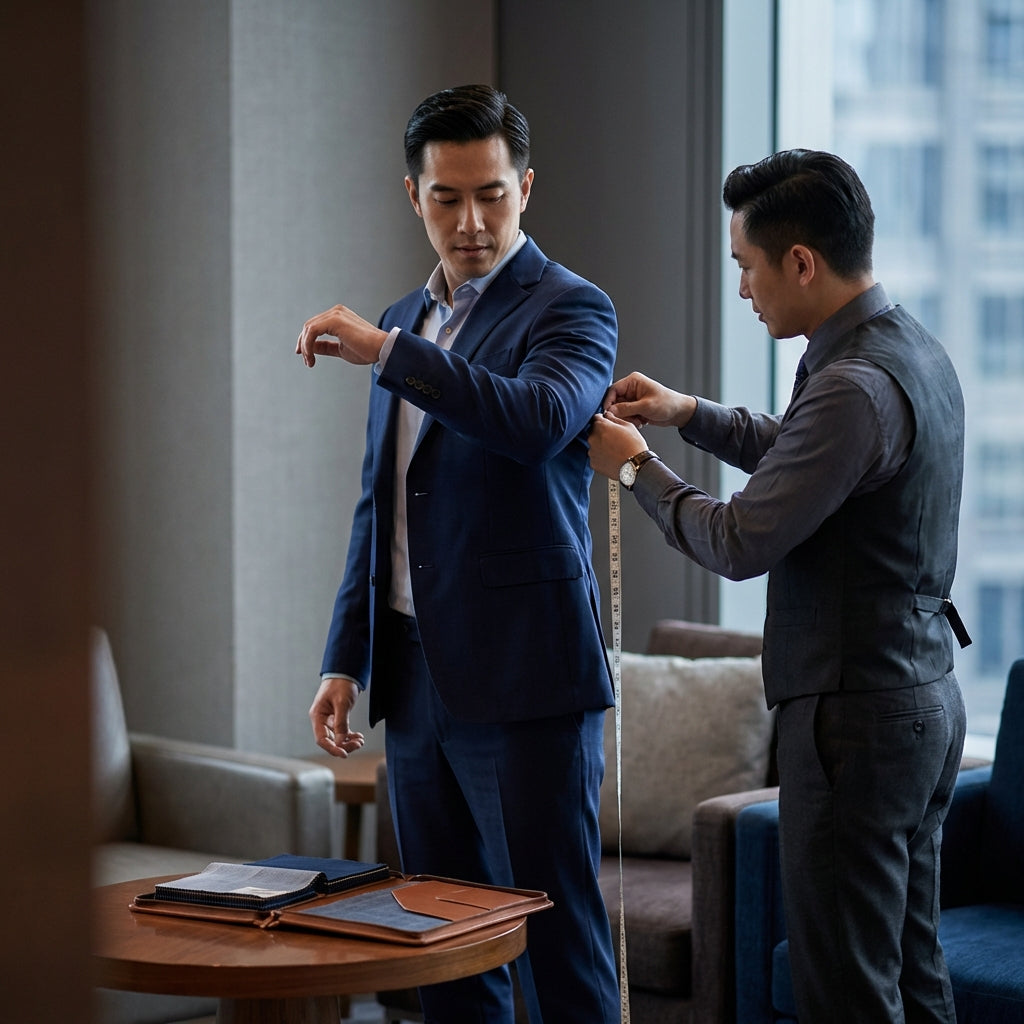
A standard tailor measures seven to ten points on the body. Donovan England measures twenty-three.
This isn't about excessive detail for detail's sake. It's about capturing the structural reality of your frame with enough specificity that every angle of a suit sits the way it should. The 23-point body analysis accounts for asymmetries, proportional quirks, and postural habits that generic measurements miss. One shoulder slightly higher than the other. A curved spine from years at a desk. An athletic build that doesn't fit neatly into size categories.
Each point directly translates to tailoring decisions: sleeve pitch, button stance, collar spread, jacket length, trouser break, and dozens of other variables that separate a suit that fits from a suit that feels like it was made for you specifically.
Here's what happens in practice: You step through the analysis, and the tailors document the precise geometry of your body. That data becomes the foundation for every garment that follows. When you order a second jacket six months later, the measurements are already there. No guesswork. No second-fitting required because the proportions align with how you actually stand and move.
The confidence this creates is tangible. You're not making mental adjustments to clothing. Your body and your suit are synchronized. This synchronization shows up in posture, in the absence of fidgeting, in the way you project authority without thinking about it.
What to do next: Consider whether your current wardrobe requires frequent adjustments or feels "almost right." That gap is precisely what precision measurement is designed to close.
How the Custom Try-On Process Works
After the 23-point body analysis, a custom try-on garment arrives at your location. This is a pattern-specific prototype built in unfinished canvas, designed to validate fit before any final fabric gets cut.
You put it on. You move in it. You sit, stand, reach across a table, and assess how the proportions actually feel rather than how they look on a hanger. This is where theoretical measurements become lived experience.
The try-on serves a critical function: it catches any refinements needed before expensive Italian fabric gets cut. You might discover that the jacket length should be a half-inch shorter, or that the chest width feels constrained during a full range of motion. These adjustments happen now, when the only material at stake is the try-on garment itself.
Feedback is simple and direct. You note what works and what needs adjustment. The tailors incorporate those changes into the final specifications. Most clients need only minimal refinements at this stage; the 23-point analysis catches the major proportional questions. The try-on simply confirms that theory matches reality.

This process typically takes one to two weeks from initial measurement to try-on arrival. You're not in a fitting room environment. You're wearing it in context, often during your regular day. That real-world assessment is far more reliable than a single fitting appointment in artificial lighting.
Once you approve the try-on fit, the final garment moves into production. The specifications are locked in. The premium fabrics are sourced and cut with precision. Hand-stitching begins.
What to do next: Think about how your current suits feel during different parts of your day. Which moments make you most aware of the fit? That awareness is your baseline for what improvements matter most.
Italian Fabrics and Hand-Stitched Craftsmanship
The fabric is where aesthetics and performance converge. Donovan England sources from premium Italian mills, choosing materials that drape with intention, breathe appropriately for season and climate, and age gracefully over years of wear.
Italian fabric mills represent centuries of refinement in how natural fibers are woven and finished. You can feel the difference the moment cloth touches your skin. The weight carries authority. The weave shows subtle texture without shouting. Colors hold their depth rather than fading into dullness. These are the kinds of details that executives notice over time, even if they can't articulate exactly why one suit looks more expensive than another.
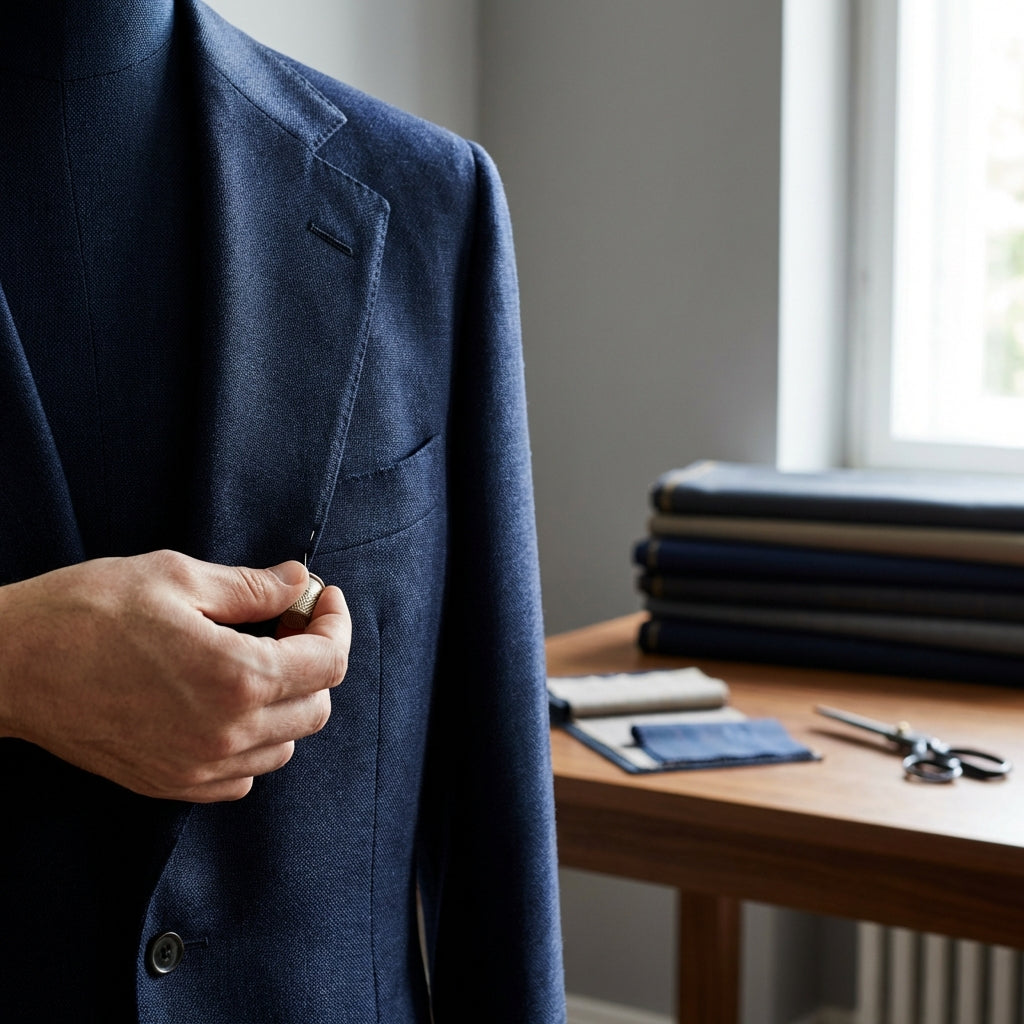
The hand-stitching component is equally important. Machine stitching is precise and efficient, but it's rigid. Hand-stitching allows the tailor to work with the fabric's natural movement and tension, creating seams that bend and stretch with your body rather than against it. This is the difference between a suit that feels structured and one that feels like an extension of yourself.
A hand-stitched buttonhole, for instance, has slight variations in tension that actually strengthen the button and reduce stress at the pressure point. Machine buttonholes are mathematically perfect but mechanically brittle. Over the course of wearing and washing a suit multiple times per week, this distinction becomes apparent.
The construction also means that repairs and alterations are straightforward. If a seam loosens or a button pulls, a skilled tailor can re-stitch rather than patch or rebuild. This longevity transforms the economics of the wardrobe. You're not replacing suits every two to three years. Quality suits built this way last a decade or more.
What to do next: Examine the seams and buttonholes on a suit you own. Notice whether they feel flexible or rigid, whether edges are consistent or slightly irregular. That tactile assessment will calibrate your understanding of craftsmanship.
Recalibrating Your Wardrobe Without the Showroom Visit
Most executives reach a point where they recognize that nothing fits correctly anymore. Either they've changed shape, outgrown their previous style, or accumulated suits that served their old role but not their current one. The instinct is often to start over with a closet purge. Instead, mobile bespoke tailoring treats this moment as a recalibration.
You work with the service to identify which garments are worth keeping and which represent outdated professional needs. Then you build new pieces around that foundation. Instead of a chaotic wardrobe overhaul, you're systematically upgrading.
This process happens without visiting a showroom or sitting through a design consultation in an unfamiliar environment. Fabric samples come to you. Style discussions happen via call or video, in your own space, with time to think rather than react. The samples stay with you long enough to visualize them against your existing pieces and observe how light changes their appearance throughout the day.
For busy professionals, this matters. You're not carving out three-hour blocks for wardrobe planning. You're integrating the process into your existing rhythm. A quick call to discuss proportions. Samples arrive. You assess them over a few days. Decisions get made with clarity rather than rushed energy.
The streamlined nature of mobile service also removes pressure to over-buy. With a showroom visit, there's often an implicit expectation to purchase multiple items to justify the trip. With mobile bespoke, you order what you actually need, when you need it. That restraint results in a more coherent wardrobe because every piece was added with intention.
What to do next: Photograph your current professional wardrobe from the front and side. Look for patterns in which items you actually wear versus which ones sit unused. That ratio reveals where your current collection misses the mark.
The Convenience of Luxury at Your Location
Luxury is traditionally associated with exclusivity and scarcity, which often means inconvenience for the consumer. You travel to the prestigious address. You work around the concierge's availability. You adjust your schedule to align with their service hours.
Mobile bespoke inverts that model. The service comes to you because the tailoring itself, not the location or appointment difficulty, is the luxury. Your office conference room becomes the fitting space. Your home becomes the measurement location. You set the window. You control the environment.
This convenience compounds over time. After the initial bespoke suit, subsequent orders require even less friction. The measurements are on file. You're familiar with the process. A new jacket or trousers can be ordered with a phone call and arrives six weeks later. You're not re-discovering the service each time.

Travel also becomes simpler. If you're relocating offices or working from multiple cities, the mobile service adapts. Measurements follow you. New samples can be sent to any address. This flexibility is particularly valuable for executives whose roles span geographies or whose companies operate across time zones.
The home-based or office-based nature also means privacy. You're not trying on garments where colleagues, competitors, or anyone else can observe. For high-profile executives, this discretion is valuable. The wardrobe upgrade happens quietly, without the announcement that comes with visiting a flagship tailor location.
What to do next: Audit your average week for available pockets of time. Identify one 90-minute window where a tailor visit could realistically occur in your location without disrupting work.
Building Your Personalized Digital Lookbook
Once your bespoke garments begin arriving, a personalized digital lookbook emerges as your ongoing style reference. This isn't a generic mood board. It's a curated collection of every piece you've had tailored, with detailed imagery showing how each item works in combination and in various professional contexts.
The lookbook serves several practical functions. First, it prevents redundancy. When you're considering a new jacket or trouser, you can reference existing pieces to ensure you're building complementary items rather than duplicates. Second, it becomes a communication tool when you want to place an order. Instead of describing a style you're imagining, you can point to similar pieces in your existing collection and refine from there.
Third, and perhaps most valuably, it compounds your investment in the service over time. Your lookbook becomes increasingly sophisticated and comprehensive. After five or six pieces, you have a clear visual record of your professional aesthetic. That visual consistency translates into a coherent wardrobe that feels intentional rather than accumulated.
The digital format also makes it accessible from anywhere. You're at a conference and considering adding one more jacket to a trip. You pull up your lookbook, see what you already own, and make an informed decision about whether you need the additional piece. You're not ordering duplicates or mismatched items because you couldn't remember what you already had.
For executives who travel frequently or manage multiple office locations, this accessibility is particularly useful. Your wardrobe exists as organized reference that you can access on any device, at any time.
What to do next: Gather photographs of three to five outfits you wear regularly and feel confident in. That visual baseline will inform your style preferences when building bespoke pieces.
Quarterly Updates: Staying Ahead of Your Evolving Style
Professional style isn't static. Your role evolves. The context of your work shifts. Your body changes. What worked confidently two years ago may feel dated or ill-fitted now.
Mobile bespoke tailoring addresses this through quarterly wardrobe update recommendations. Rather than waiting until you consciously recognize that something needs refreshing, the service proactively suggests adjustments or additions based on your professional trajectory and the changing contexts you're operating in.
A promotion might warrant a shift in formality or a deeper investment in premium fabrics. A role that increases public visibility might suggest additional jacket options for variety while maintaining your established aesthetic. A shift from primarily office-based work to client-facing roles might recommend building out accessories or updating proportions.
These recommendations come from the tailors who know your fit, your preferences, and your wardrobe history. They're not generic trend suggestions. They're specific to your circumstances and calibrated to your existing collection.
The quarterly cadence also prevents the wardrobe from stagnating. You're not ignoring your professional appearance for three years and then suddenly overhaul everything. Instead, you're making incremental, thoughtful adjustments that keep your wardrobe current and relevant without requiring constant mental energy.
Many executives find this rhythm particularly valuable. You're not making wardrobe decisions from a place of crisis or frustration. You're making them as part of a regular refresh cycle, with expert guidance, during periods when you have time to consider options.
What to do next: Note any upcoming changes in your role or work context over the next twelve months. Anticipating these shifts allows for proactive wardrobe planning rather than reactive scrambling.
Global Shipping and Seamless Service
Donovan England operates globally, which means your location is not a limiting factor. Whether you're in New York, London, Sydney, or a city between any of those points, the bespoke service operates with the same precision and timeline.
Fabrics are sourced and shipped internationally. Garments are hand-stitched and packaged with care. Delivery arrives with protection and tracking. The entire process, from initial measurement to final delivery, functions across borders without compromising quality or introducing unpredictable delays.

For executives with genuinely global responsibilities, this capability is essential. You're not managing one wardrobe for your home office and patching together separate solutions for other locations. You're building a unified wardrobe that travels with you, with all pieces tailored to your exact specifications and available wherever your work takes you.
The service also accommodates the practical realities of international work. Measurements taken during one location can inform orders placed from another. Garments can be delivered to multiple addresses. Communication happens via your preferred channels, whether that's call, email, or messaging.
This seamlessness removes a common friction point for senior executives with international profiles. You're no longer choosing between wearing suits that fit perfectly or being able to access wardrobe updates while traveling.
What to do next: If you work across multiple cities or countries, identify the primary locations where you need professional wardrobes. This clarity will inform how many complete suiting collections you build.
Wearing Authority: The Tangible Impact of Perfect Fit
A suit that fits perfectly changes how you occupy space. This isn't metaphorical. It's literal.
When every seam aligns with your body, when proportions match your frame, when you're not adjusting fabric because something is binding or pulling, you stand differently. Your shoulders relax slightly. Your posture improves. Your attention shifts entirely from the garment to the conversation, the presentation, the work.
This shift shows. Colleagues notice it, though they likely won't articulate it as "better tailoring." They'll observe that you seem more confident, more composed, more aligned with your role. They're responding to the absence of the small signals that come from ill-fitting clothes: the fidgeting, the tugging, the postural compensation.
For executives, this effect compounds across dozens of interactions per month. Quarterly board meetings. Client pitches. Media appearances. Internal presentations. In each of those moments, you're showing up as expected, without the distraction of garment-related friction.
The authority that emerges isn't fabricated. It's authentic confidence that comes from knowing, at a cellular level, that your appearance is precisely calibrated. You're not wondering if you look right. You know you do. That knowing allows you to focus entirely on the substance of what you're doing.
Over time, this becomes your professional norm. You expect to wear authority because your wardrobe is built to support it. That expectation influences how you prepare for important moments and how you carry yourself through routine ones.
What to do next: Before your next major professional engagement, notice how much mental energy you allocate to your appearance versus the actual content or message you're delivering. That allocation reveals how much your current wardrobe is or isn't supporting your professional focus.
Investing in a Wardrobe That Works as Hard as You Do
Bespoke tailoring requires upfront investment. A single suit costs more than equivalent off-the-rack options. A complete executive wardrobe represents meaningful capital expenditure.
But the economics shift once you zoom out to longevity and efficiency.
A precision-fitted suit built with hand-stitching and premium fabrics lasts ten to fifteen years with proper care. You'll wear it two to three times per week during that span. That's roughly 1,200 to 1,800 wearings per garment. Divide the cost by the wearings and the per-use expense becomes remarkably reasonable compared to suits you replace every three to four years.
Beyond raw durability, there's the efficiency factor. You need fewer total suits because each one is built to work with others. You're not carrying redundant pieces or items that don't align with your aesthetic. Your closet becomes a cohesive system rather than an accumulated collection. That cohesion means more outfit combinations from fewer garments. You're traveling lighter. You're thinking less about what to wear.
For senior professionals whose wardrobes directly influence how clients, boards, and investors perceive them, this isn't an expense category. It's a tool investment, comparable to how you'd evaluate other resources that directly impact your professional effectiveness.
The quarterly update recommendations also prevent wasteful purchasing. You're not impulse-buying suits that don't fit your existing collection or your actual professional needs. You're making strategic additions guided by expertise. That discipline saves money over time despite the higher per-unit cost.
Finally, there's the intangible value of not thinking about your wardrobe. Once pieces are in rotation, you're no longer allocating mental energy to fit, proportion, or whether you have appropriate options for upcoming engagements. That cognitive relief is worth quantifying. Time spent overthinking professional appearance is time not spent on the work that actually moves your career forward.
Consider scheduling a consultation to explore how mobile bespoke tailoring integrates into your professional routine. The process begins with understanding your specific needs and constraints, and proceeds from there with precision and clarity.