Cart
0

Why Precision Tailoring Defines Executive Authority
Best Bespoke Suit Recommendations for Executive Professionals
Your suit announces you before you speak. For accomplished executives, this means one thing: nothing short of precision. Off-the-rack garments are built on statistical averages—a jacket cut for a body type that doesn't quite match your proportions, a sleeve length that's close enough but not exact, trousers that sit where manufacturers guessed they should rather than where they fit you.
This isn't a minor aesthetic difference. When a suit doesn't fit precisely, it works against your presence. Your shoulders may look sloped instead of squared. Your jacket may pull across the chest or gap at the waist. Your trousers may bunch at the ankle or drag underfoot. Your body is fighting the garment, and everyone in the room senses that friction, even if they can't name it.
Precision tailoring removes that friction entirely. A bespoke suit is built from the ground up around your exact measurements, proportions, and posture. It moves with you, not against you. It communicates that you've attended to detail in a way that matters. When you're showing up the way you're expected, your confidence isn't borrowed from the label on your jacket. It comes from knowing that every element fits exactly as it should.
The executives who understand this recognize that a perfectly fitted suit is a tool. It's not ostentation. It's professionalism made visible. It says you respect the meeting, the client, the role. It allows you to focus on your work instead of adjusting your cuffs or thinking about whether you look the part.
The 23-Point Body Analysis Advantage
Real precision begins with measurement. Not the casual tape across your chest that most tailors perform, but a comprehensive analysis that captures how your body actually moves and carries itself.
A 23-point body analysis measures far more than sleeve length and chest width. It examines shoulder slope, arm length relative to torso, neck proportion, the angle of your back, how your weight distributes across your frame, and dozens of other biomechanical details. This isn't abstract data collection. These measurements become the foundation for how a jacket drapes, where trousers break at your shoe, and how every seam aligns with your body's actual geometry.
Why does this depth matter? Consider two executives with identical chest measurements. One has sloped shoulders; the other carries his shoulders square. A standard measurement would suit neither perfectly. A 23-point analysis captures that difference immediately, allowing the tailor to cut the jacket so the shoulder seams sit exactly where they should on each man's frame. The same precision applies to back length, sleeve pitch, trouser rise, and the taper that makes your leg look proportional rather than pinched or baggy.
This approach also accounts for posture and how you hold yourself. Some men stand with a slight forward lean; others pull back slightly. Your suit should accommodate your natural carriage, not fight it. The analysis reveals these patterns, and the tailor builds them into the pattern from the start.
The outcome is tangible: a suit that looks like it was made for no one else. Not because of ornate detailing or flashy fabrics, but because the fundamental architecture of the garment matches your architecture. You don't need to break in a bespoke suit; it fits correctly from the first wearing.
Criteria for Selecting Your Bespoke Partner
Not every tailor is equipped to deliver precision at this level. The market includes custom operations that take basic measurements, mass-produced suiting with slight alterations, and true bespoke tailors who build your suit from scratch. These aren't subtle differences in price; they're fundamental differences in process and outcome.
When evaluating a bespoke partner, look for these non-negotiables:
Comprehensive measurement protocol. Does the tailor use a standardized, detailed body analysis? Ask specifically about their process. A credible partner will explain not just measurements but how they use that data to inform pattern cutting and construction choices.
Try-on garment process. A bespoke suit requires at least one fitting before the final piece is constructed. A responsible tailor will build a sample garment (called a toile or proto) so you can experience the fit, make adjustments, and verify proportion before the final suit is cut from premium fabric. This step separates confident craftspeople from those who hope their initial measurement was correct.
Material sourcing standards. Ask about fabric suppliers. Are they sourcing from reputable European mills? Italian mills in particular have centuries of expertise in suiting fabrics. Quality matters because a perfectly fitted suit in mediocre cloth won't wear well or age gracefully. Premium fabrics have better hand, longer life, and greater visual depth.
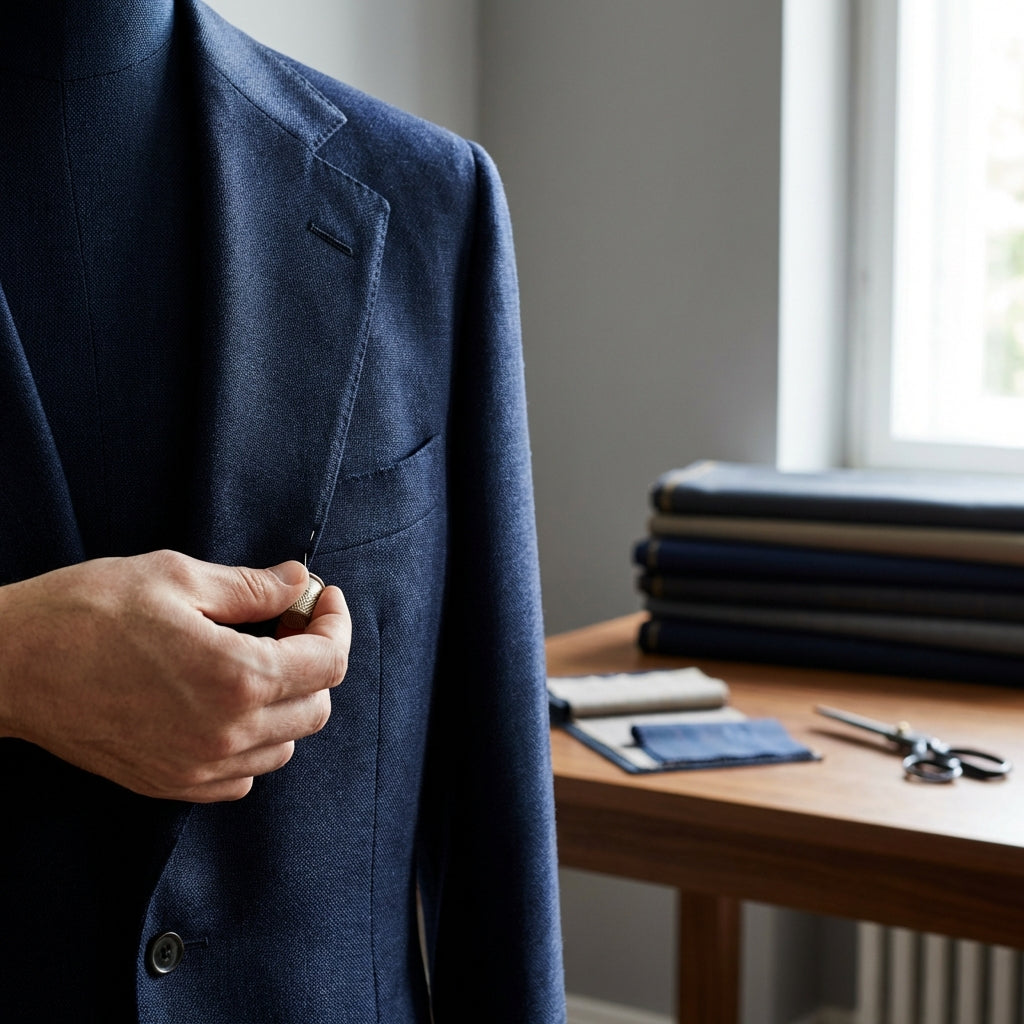
Hand-finishing evidence. Walk through what hand-stitching looks like. A suit with a hand-stitched lapel, gorge, and interior will feel more supple and age more beautifully than a machine-finished suit. Similarly, ask about buttonholes. Hand-stitched buttonholes are a reliable indicator of full craftsmanship.
Transparent timeline and communication. A bespoke suit takes time because precision cannot be rushed. Reputable tailors will provide a clear timeline (typically eight to twelve weeks from final measurements) and maintain regular communication about progress and fittings.
Client accessibility. This might mean a showroom, regular trunk shows in your city, or home-based service. The method matters less than whether the tailor makes it convenient for you to engage fully with the process. Some high-achieving professionals prefer the efficiency of consultations and fittings conducted at their home or office.
Take time to interview potential partners. Ask to see examples of their work on clients with similar builds to yours. Request references if possible. A master tailor will confidently discuss their process and stand behind their work.

Custom Try-On Process and Fit Assurance
The try-on process is where precision becomes visible. After your comprehensive body analysis, your tailor will cut a trial garment in muslin or a test fabric. This piece isn't meant to be worn; it's a blueprint that lets you and your tailor evaluate the foundation before any expensive material is used.
When you put on the try-on garment, you're assessing several distinct elements. The jacket's shoulder seams should sit right at the point of your shoulder; if they creep toward your neck or down your arm, the entire jacket will hang incorrectly. The jacket's length should cover your backside without hanging below your knuckles when your arms hang naturally. The chest should allow a hand's width of fabric when buttoned, not pulling or billowing. The sleeves should show a half-inch to an inch of shirt cuff at the wrist.
For trousers, the rise matters enormously. Too high, and you'll be uncomfortable; too low, and they'll sag under the jacket. The break at the shoe should be minimal for contemporary styling or slightly fuller for traditional proportion, but it should be intentional, not accidental. The taper should enhance your leg line without restricting movement.
Your tailor will mark adjustments directly on the try-on garment. These marks become micro-instructions for refining the pattern. Perhaps the back length needs adjustment by half an inch. Perhaps one shoulder needs a quarter-inch more slope. These aren't guesses; they're precision calibrations based on how the garment behaves on your actual body.
This fitting conversation is collaborative. You're not submitting to the tailor's judgment; you're partnering to define exactly what "perfect fit" means for you. If you prefer a slimmer silhouette, or a more forgiving cut through the chest, or a particular trouser break, now is the moment to specify. These preferences will be built into your final suit.
Once adjustments are agreed upon, your tailor will refine the pattern and order your chosen fabric. The final suit is cut from that perfected pattern, made to your exact specifications in material you've selected. The fit assurance comes from having tested the proportions before committing to premium cloth.
Premium Italian Fabric Selection for Lasting Quality
The fabric is where durability, aesthetic depth, and tactile quality converge. A perfectly fitted suit in mediocre fabric ages poorly. A well-chosen cloth, properly cared for, can outlast most off-the-rack suits by years.
Italian mills set the standard for business suiting. Mills like Loro Piana, Ermenegildo Zegna, Scabal, and Cerruti have spent generations perfecting the art of spinning, weaving, and finishing wool. These aren't simply different brands; they represent different philosophies about weight, texture, and performance.
When selecting fabric, consider these practical factors:
Weight and seasonality. Summer suiting runs 8-10 ounces per yard; winter cloth typically runs 12-14 ounces. Mid-weight fabrics at 10-12 ounces work year-round in most climates. The weight affects drape, breathability, and durability. A lighter cloth breathes better but may show wrinkles sooner; a heavier cloth holds structure longer but can feel stiff if not properly finished.
Fiber content and blends. Pure wool is traditional and breathable. Wool blended with cashmere (5-10 percent) adds softness and subtle luster. Wool with silk offers light reflection and a slightly warmer hand. These percentages affect durability and care requirements; a cashmere blend may require more gentle cleaning than pure wool.
Weave structure. A plain weave is stable and formal. A twill weave (diagonal lines visible in the fabric) adds visual interest and slightly more durability. Herringbone and other structured weaves offer personality while maintaining professional sophistication.
Color and pattern restraint. Executives typically build around navy, charcoal, and lighter grays. These anchor a wardrobe and mix easily with shirts and ties. A secondary tier might include subtle checks, faint herringbone, or muted earth tones. Bolder patterns and colors have their place, but they restrict how many times you can reach for a suit in a single week.
Your tailor should present fabric samples that feel good in your hand and photograph clearly under your office lighting. Fabric choice is partly technical and partly personal preference. A master tailor will guide you toward options that both suit your skin tone and work practically within an executive wardrobe.
Hand-Stitched Craftsmanship and Construction Standards
The difference between a machine-finished suit and a hand-stitched one is felt in wear, not always visible at first glance. Hand stitching offers flexibility and durability that machines cannot match.
Consider the lapel. A machine-sewn lapel has thread running in a straight, relentless line. Under stress, that line is prone to tearing. A hand-stitched lapel uses a technique called prick stitching, where thread passes through the fold of fabric in a way that distributes tension. The result is a lapel that flexes with your jacket and outlasts machine stitching by years.
The same principle applies to buttonholes. A hand-stitched buttonhole is finished with careful thread work that reinforces the opening. A machine buttonhole is cut and finished in seconds but is more prone to fraying, especially under the stress of daily buttoning and unbuttoning.
Interior construction matters equally. A properly made suit has a front piece of interfacing (a stabilizing layer) that's pad-stitched by hand. This anchors the canvas to the fashion fabric while allowing slight flexibility. A machine-stitched canvas is rigid and doesn't adapt to your body as the suit ages. Over months and years, a pad-stitched canvas breaks in and conforms to how you wear the jacket, becoming more comfortable and more responsive.
The lining is often the last thing an executive notices, but a quality lining affects durability significantly. A suit lined with natural silk or a premium cotton-blend fabric allows your shirt to glide across the jacket interior. A cheap lining catches, wrinkles, and wears through faster. Combined with hand-stitching, a quality lining means your suit will move well and age gracefully.

Ask your tailor to explain their specific hand-stitching practices. How much of the suit is hand-finished? Where does machine work serve functional purposes? A credible tailor will delineate between hand-stitching done for durability (lapels, buttonholes, seams under stress) and hand-finishing done for refinement and comfort.
Building a Streamlined Quarterly Wardrobe Strategy
Most executives don't need a closet full of bespoke suits. They need a strategic core that covers every professional scenario with pieces they actually wear. This typically means four to six foundational suits, built over time, rather than a single expensive commission.
A streamlined quarterly strategy works like this: Establish your core neutrals first. A navy suit is non-negotiable. One charcoal suit handles most situations. A medium gray rounds out your foundation. These three pieces are worn most frequently and are your investment priority. They should be in premium fabrics and fitted exactly to your proportions.
With those foundations established, add seasonality and variation. A lighter gray or tan works in spring and summer without looking underdressed. A subtle check or herringbone in charcoal or navy adds visual interest without complexity. A texture variation, like a linen-blend in summer or a brushed wool in winter, keeps your rotation fresh without overwhelming your wardrobe.
The quarterly rhythm makes sense because you change slightly over time. Your body may shift after a demanding travel schedule or a focused fitness period. A quarterly check-in with your tailor identifies whether your existing suits still fit perfectly or whether adjustments are needed. This also gives you a moment to recalibrate what's missing from your rotation. Perhaps you're doing more casual client meetings and need a sport coat. Perhaps you're traveling internationally and need a suit that resists wrinkles.
Each new suit should integrate with existing pieces. Matching shirts and ties to one new navy suit when you already own two navy suits isn't efficient. Instead, think about creating combinations across your wardrobe. A new charcoal suit should work with the shirts and ties that already work with your gray pieces.
Donovan England's quarterly recommendations are built on this principle: they identify gaps in your rotation, suggest pieces that expand your flexibility, and ensure each new commission strengthens your entire wardrobe rather than creating isolated items.
Document what you own. Keep a simple inventory of suit colors, when they were made, and what shirts pair well with each. This takes five minutes but prevents duplicate purchasing and reveals patterns in how you actually dress.
Global Service and Home-Based Convenience
Bespoke tailoring once required multiple in-person visits to a tailor's shop. Travel constraints and demanding schedules made this impractical for busy executives. Modern bespoke services remove this friction while maintaining the precision that custom suiting demands.
Home-based and mobile service models bring the tailor to you. Initial consultations, body measurements, and fittings can occur at your office, home, or preferred location. This eliminates the need to plan around a tailor's location or hours. For executives managing multiple time zones or intensive travel schedules, this accessibility is essential.
Digital communication supports the process without compromising quality. Your tailor can send fabric samples and collect your feedback via video call or email. Progress updates keep you informed about construction stages. Final coordination for fitting appointments happens asynchronously, fitting your calendar rather than forcing you into inflexible booking windows.
Global shipping extends access to master tailors regardless of geographic limitation. If you've found a tailor whose work resonates with you, but they're based elsewhere, you can still commission suits. Measurements are taken locally, fabric is shipped to the tailor, and the finished suit arrives at your door. You may make one trip for a fitting if the distance justifies it, or fittings can occur via consultation with minor adjustments handled through the tailor's alteration process.
This doesn't mean all bespoke services are created equal. A tailor who offers convenience but cuts corners on the body analysis or skips the try-on process is trading quality for speed. Look for partners who combine accessibility with the non-negotiable elements of precision tailoring. If a service promises a suit in four weeks without a fitting, that's a signal they're prioritizing turnaround over accuracy.
The best global services maintain consistent standards. Your measurements don't change if your tailor is local or international. A comprehensive 23-point analysis produces the same precision whether conducted in New York or Milan. The tailor's expertise and commitment to fitting matter far more than their physical proximity to you.
Comparison: Bespoke Versus Off-the-Rack Solutions
The practical question executives ask is whether bespoke is worth the investment. The answer depends on your specific situation, but the trade-offs are worth examining clearly.
Off-the-rack suiting excels at speed and accessibility. You can walk into a department store or tailoring chain and have a suit altered to you within days. The cost is typically 40-60 percent less than bespoke. If you need a suit for a specific event and aren't planning to wear it frequently, off-the-rack with alterations may be sensible.
However, off-the-rack suiting has structural limitations. A jacket is cut for a body type, and alterations can adjust length and width but cannot change the fundamental architecture. If you're broad-shouldered but proportionally smaller in the chest, a standard jacket cut won't serve you well. If you have a short neck or sloped shoulders, off-the-rack cuts will never fit as well as they could.
More importantly, off-the-rack durability is lower. The interfacing is lighter, the linings cheaper, and the stitching is entirely machine-done. After one to two years of regular wear, seams start showing stress. Buttonholes fray. The lining tears. You're buying a replacement suit every few years rather than a piece that ages gracefully over a decade.
Bespoke suiting requires more time upfront. From initial measurement to final delivery typically spans eight to twelve weeks. The financial commitment is higher, ranging from 3-8 times the cost of an off-the-rack suit. But you're paying for precision, premium materials, and handcraftsmanship designed to last.

The per-wear cost becomes relevant once you account for longevity. A bespoke suit worn twice a week for ten years costs less per wear than off-the-rack suits purchased every two years. Additionally, because a bespoke suit fits perfectly, you'll actually wear it more frequently. A suit that fits exactly to your proportions becomes reliable; you reach for it confidently.
For executives whose image and professional presence matter, bespoke is an investment with measurable returns. Each suit in your rotation fits perfectly, looks proportional, and gives you confidence that your appearance is controlled and intentional. You're not wondering if your jacket fits correctly; you know it does.
The decision matrix is simple: If professional appearance is incidental to your work, off-the-rack alterations suffice. If your presence and appearance influence how others perceive your authority and competence, bespoke tailoring is cost-justified many times over.
Investment and Value Retention in Custom Suiting
A bespoke suit is a capital asset. Unlike fast fashion, which depreciates immediately, a well-made suit holds value and utility across years. Understanding this longer financial arc helps justify the initial investment.
The cost structure of bespoke suiting breaks down roughly as follows: fabric represents 25-35 percent of the cost, labor (pattern-making, cutting, hand-stitching, and finishing) represents 40-50 percent, and overhead, design consultation, and margin comprise the remainder. This is why bespoke isn't negotiable on price; you're paying for skilled labor and premium materials, both of which have genuine costs.
That cost produces tangible durability. A bespoke suit in premium wool from an Italian mill, hand-stitched and properly finished, will withstand regular wear for 10-15 years or more if cared for correctly. Compare this to an off-the-rack suit that begins deteriorating after 2-3 years of regular wear. The per-year cost of a bespoke suit becomes increasingly attractive as years accumulate.
Secondary value is harder to quantify but real. A perfectly fitted suit projects confidence and attention to detail. Clients notice. Colleagues notice. That intangible element of authority and polish is worth something to executives competing for senior roles or managing high-stakes relationships.
Care extends longevity. A proper suit care routine involves brushing after each wear, airing the jacket between wearings, and professional dry cleaning only when necessary (2-3 times per year rather than after each wearing). Pressing should be done carefully, with steam rather than heat. These practices are simple but critical. A bespoke suit properly maintained outlasts one that's abused, regardless of its initial quality.
Alteration is possible. Unlike off-the-rack suiting, a bespoke suit can be altered by any competent tailor because the foundation is sound. If you gain or lose weight, an experienced tailor can adjust the suit while preserving the hand-stitching and internal construction. This adaptability extends usefulness through life changes that might otherwise require replacing the entire garment.
From a personal economics perspective, a bespoke suit is one of the few clothing purchases where higher initial cost correlates with lower total cost of ownership. This justifies the investment for executives who plan to wear their suits regularly.
Your Selection Guide for Perfect Fit Confidence
Choosing a bespoke tailor requires both discernment and action. Here's a practical framework for moving from consideration to commitment.
Start by identifying what matters most in your selection criteria. If consistency and transparency are non-negotiable, look for tailors with clear processes and client communication. If you value hand-finishing and heritage craftsmanship, research their specific techniques. If convenience is paramount, ensure they offer home-based or mobile service. You cannot optimize for everything, so know your priorities.
Interview at least two potential partners. Ask about their body analysis process, try-on procedures, fabric sourcing, and hand-stitching practices. Request the names of local references if possible, or ask to see portfolios of completed work. A confident tailor welcomes these questions.
Evaluate your needs practically. Are you building a core wardrobe from scratch, or adding to existing pieces? How frequently do you wear suits? What gaps exist in your current rotation? A tailor who asks these questions before recommending fabrics is thinking strategically. One who immediately shows you their most expensive fabrics is selling, not consulting.
Make your first commission a foundational piece. Choose navy, charcoal, or gray in a quality fabric that will integrate with your existing wardrobe and be worn frequently. Resist the urge to commission a bold color or experimental style for your first bespoke suit. Prove the process works with a conservative choice; you can explore further once you've experienced the fit advantage.
Schedule adequate time. Don't commission a bespoke suit with a six-week deadline unless absolutely necessary. The standard eight to twelve-week timeline exists because precision cannot be rushed. If a tailor promises faster delivery, ask what they're compromising.
Commit to the try-on process. Attend your fitting appointments seriously. Evaluate the fit critically. Ask questions about adjustments. This is your opportunity to ensure the final suit meets your expectations. Rushing through a fitting to save time defeats the entire purpose.
Once your first suit is complete, maintain it properly and revisit your tailor annually. A quarterly wardrobe strategy builds over time, and having an established relationship with a master craftsperson who understands your body and preferences is invaluable.
Taking this approach removes guesswork and positions you to invest confidently in bespoke suiting that genuinely supports your professional presence. The goal is not a closet full of suits, but a carefully curated rotation of perfectly fitted pieces that work harder and last longer than anything off-the-rack can deliver.
For further reading: Donovan England bespoke suits.
Schedule your Complementary Wardrobe Review Call