Cart
0
Why Your Custom Suit Deserves Premium Care Standards
Best Bespoke Suit Care Practices for Protecting Your Custom Wardrobe Investment
A bespoke suit built through precision measurement and hand-stitched craftsmanship represents a fundamentally different asset than off-the-rack tailoring. The 23-point body analysis that ensures perfect fit also creates garments engineered specifically for your proportions—which means standard care approaches often miss the mark.
When you invest in custom suiting, you're paying for geometry that works with your frame, not against it. That precision extends beneath the surface. Italian fabrics selected for your coloring and lifestyle, interior construction designed to move with your body, and finishing details that only reveal themselves with wear all depend on thoughtful maintenance to retain their value.
The real cost of improper care isn't an immediate stain or tear. It's the slow erosion of fit, the premature aging of fabric, and the loss of the confidence that comes from wearing a suit that actually belongs to you. Premium care standards aren't about obsession; they're about protecting the investment in how you show up.
Actionable takeaway: Before adopting any care routine, photograph your suit's condition when it arrives. You'll have a baseline to reference when evaluating whether a cleaner is treating the garment appropriately.
Essential Maintenance Criteria for Bespoke Garments
Custom garments demand criteria that differ from your typical laundry checklist. Hand-stitched seams, structured interlinings, and premium fabrics require methods that preserve construction integrity rather than speed.
The three pillars of bespoke suit maintenance are frequency, method, and provider selection. Frequency means cleaning only when necessary, not on a schedule. Method means techniques that account for fabric composition and hand-finished details. Provider selection means finding a cleaner experienced with bespoke garments, not the fastest option near your office.
Between cleanings, the real work happens through proper storage and light refreshing. This is where most executives stumble. A suit that never sees a hanger or closet rod degrades faster than one cleaned monthly by a specialist.
Professional Dry Cleaning: Frequency and Selection Standards
Clean your bespoke suit once every six to twelve months of regular wear, depending on environment and care between wears. That number surprises most professionals accustomed to quarterly cleaning habits. The reason: proper storage and steaming handle most daily soiling without the chemical stress of dry cleaning.
When you do clean, the choice of cleaner matters more than frequency. Look for specialists with these credentials: experience with luxury bespoke tailoring, explicit knowledge of Italian fabrics, willingness to hand-finish details like buttons and linings, and a process that includes inspection before and after cleaning.
Communicate directly with your cleaner about your suit's construction. Mention hand-stitching. Specify fabric type if you know it. Request that they avoid pressing the chest piece, which protects the structured interior. A cleaner who asks clarifying questions is one worth keeping.
What to do next: Call three local dry cleaners and ask specifically about their bespoke suit protocols. The answer reveals whether they understand custom tailoring or treat all garments as interchangeable.

Proper Storage Solutions to Preserve Hand-Stitched Craftsmanship
Storage is where most bespoke wardrobes lose their edge. A suit folded in a dry-cleaning bag or crammed into a suitcase begins deteriorating immediately.
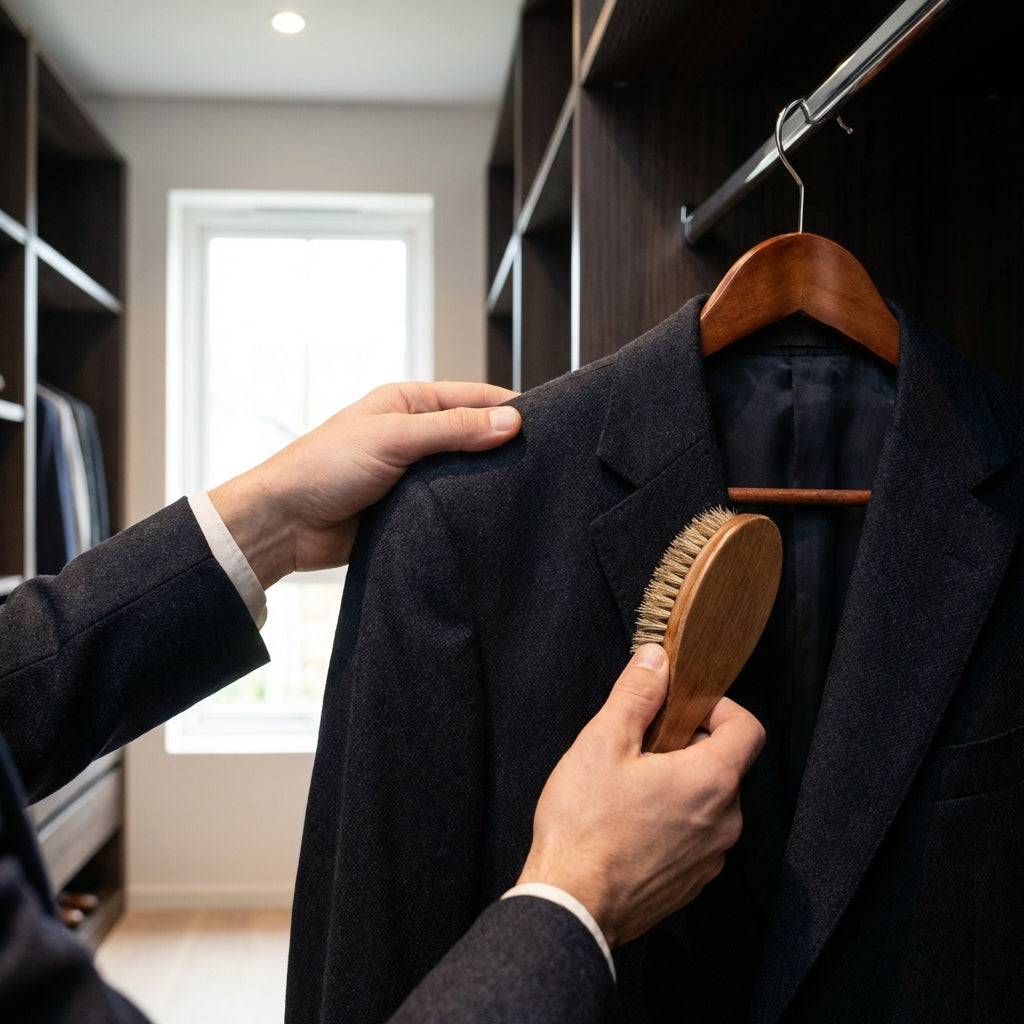
Your suit needs a sturdy wooden hanger (never plastic or wire), positioned in a closet with stable temperature and low humidity. The hanger should have broad shoulders that support the jacket's structure without stretching it. Position the hanger so the jacket hangs freely without touching other garments or the closet wall.
Trousers fold once lengthwise over a slack hanger, or hang from a specialized clip hanger at the waistband. Never fold trousers at the inseam, which creates permanent creases in the wrong places.
Use cedar blocks or sachets to deter moths, but avoid mothballs, which can damage premium fabrics and leave odors that take weeks to dissipate. For long-term storage between seasons, use breathable garment bags, never plastic, which traps moisture and promotes mildew.
Steaming vs. Pressing: The Expert Approach
Steaming and pressing serve different purposes. Pressing uses heat and pressure to flatten fabric and remove wrinkles. Steaming uses moisture and heat without crushing the weave, making it gentler for delicate construction.
For daily refreshing between wears, steaming is your primary tool. Hold a quality garment steamer six inches from the fabric surface, let the steam penetrate without pressing, and allow the fabric to dry slightly before wearing. This removes surface wrinkles and light soiling without stressing seams or hand-stitched details.
Pressing is appropriate only for specific areas: trouser legs (with a pressing cloth underneath to protect the fabric), shirt-weight dress shirts, and occasional revitalization of a suit jacket's structure. If you press at home, use low heat, a pressing cloth, and never press the chest piece, lapels, or areas with hand-stitched details.
Professional pressers who specialize in bespoke garments understand where pressure belongs and where it causes permanent damage. If your regular dry cleaner doesn't employ this level of care, request hand-steaming only.
Minor Repair and Alteration Best Practices
A loose button, small seam separation, or fraying thread should trigger immediate action, not a note for later. These minor issues compound quickly. A button left loose for a week increases stress on surrounding stitches, turning a one-minute repair into a seam rebuild.
Establish a relationship with a tailor experienced in bespoke garments. This is ideally the original tailor who built your suit, though any skilled practitioner will do. Bring garments in at the first sign of wear rather than waiting until problems are obvious.
Alterations to fit require more caution. Bespoke tailoring is engineered with specific proportion ratios. Moving a jacket button, taking in a waist, or raising a hem can disrupt these relationships if done without understanding the original design intent. Always consult your original tailor before undertaking any structural changes, even minor ones.
Actionable takeaway: Save the contact information for whoever originally tailored your suit. When you need a repair, lead with "This is bespoke from [tailor name]," which signals the level of care required.
Fabric-Specific Care Recommendations by Italian Material Type

Italian mills produce wool, wool blends, and specialty fabrics with different fiber characteristics. Each responds differently to cleaning, pressing, and long-term storage.
Pure wool and wool-silk blends are your most forgiving options. These fabrics have natural resilience and recover well from wrinkles with steaming. They're also relatively resistant to damage from dry cleaning when handled by a specialist. Avoid excessive heat when steaming these, as it can cause pilling or flatten the nap over time.
Linen blends and lightweight summer fabrics are more delicate. They wrinkle easily and require more frequent steaming, but they're also more prone to creasing permanently if pressed incorrectly. Never use high heat on linen. Cool steaming only.
Wool with cashmere content requires the most conservative care. These fabrics are prone to pilling and can felt if exposed to excessive moisture and agitation. Stick to steaming for refreshing. Minimize dry cleaning frequency, and when you do clean, specify the fiber content to your cleaner so they adjust their process accordingly.
If you're uncertain about your suit's fiber content, check the interior label or ask your original tailor. This single piece of information guides every care decision that follows.
Seasonal Wardrobe Rotation and Humidity Management
Rotating your suits seasonally extends the lifespan of each garment and distributes wear evenly across your wardrobe. A suit worn three days a week lasts longer than one worn five days weekly.
Humidity levels in your closet matter more than most professionals realize. Ideal storage maintains 45-55% relative humidity. High humidity promotes mold and mildew. Very low humidity dries out natural fibers, making them brittle. If your closet tends toward either extreme, a small plug-in dehumidifier or humidifier solves the problem inexpensively.
Before storing a suit for the off-season, ensure it's completely clean and dry. Any residual moisture creates an environment for mold growth. Leave garments on hangers, never folded, and use a breathable garment bag if storing for more than a month.
Travel Protection for Your Tailored Investment
Packing a custom suit for business travel requires technique. Rolling is gentler than folding. Roll the jacket loosely around a cylinder of dress shirts or lightweight items, wrap it in tissue paper, and secure gently.
Alternatively, hang the jacket inside a garment bag within your luggage, anchoring it so it doesn't shift during transport. Trousers can roll alongside or hang separately. This method takes up more space but minimizes creasing.
Upon arrival, hang the suit immediately in your hotel room and allow it to acclimate for a few hours before wearing. If wrinkles appeared during travel, use the hotel room steamer or contact housekeeping for pressing assistance (specify that it's a custom suit requiring gentle handling).
For frequent travelers, consider maintaining a dedicated travel suit. Some professionals keep a second, slightly less precious bespoke suit for trips, reserving their primary wardrobe for office wear.
Longevity Comparison: Maintenance Methods and Outcomes

A bespoke suit maintained according to these standards lasts fifteen to twenty-five years and improves subtly with age as the fabric settles into your body. One neglected deteriorates within three to five years, with fit degradation becoming apparent around year two.
The difference isn't dramatic monthly. It's the cumulative effect of proper storage preventing shoulder stretching, careful steaming preserving the fabric hand, selective dry cleaning avoiding chemical degradation, and prompt repairs preventing compound damage.
The financial math is straightforward. A suit that costs three to four times more than retail tailoring but lasts five to eight times longer per garment yields better cost-per-wear over your professional career. That math improves further when you factor in the intangible value of consistent, precision-fit clothing that reinforces your professional authority.
Selection Guide: Matching Care Practices to Your Lifestyle
How you use your suits determines which care practices deserve emphasis. Match your approach to your circumstances.
High-frequency wearers (suits worn 4+ days weekly): Prioritize proper storage and seasonal rotation. Invest in two to three coordinating suits to distribute wear. Clean annually. Steam between wears weekly. Establish a relationship with a specialized cleaner and tailor. This approach extends garment life and maintains fit consistency despite heavy use.
Moderate-frequency wearers (suits worn 2-3 days weekly): Rotate between three to four suits, clean annually or every two years, and steam monthly. Your lower wear volume reduces stress, so you can focus on storage quality and climate control in your closet.
Occasional wearers (suits worn for specific events): Clean before storing for the season, maintain 45-55% humidity in storage, and inspect for pests or mildew before wearing again. Your garments experience longer inactive periods, so humidity management and pest prevention become your highest priorities.
Frequent travelers: Maintain dedicated travel suits, pack with rolls rather than folds, and steam upon arrival. The reduced risk of permanent creasing and handling damage justifies the investment in a second suit.
Actionable takeaway: Write down how many days per week your primary suit typically gets worn. This single number determines whether you should emphasize rotation, cleaning frequency, or storage priority.
Recalibrating Your Wardrobe Care Strategy for Year-Round Confidence
Proper bespoke suit maintenance isn't a burdensome checklist. It's a rhythm that becomes automatic once established. The goal isn't perfection; it's sustaining the precision fit and professional appearance you invested in originally.
Begin by auditing your current care approach. Where does it miss standards? Is your closet too humid? Are you cleaning too frequently? Is your steamer collecting dust? Is your tailor on speed dial or a vague memory?
Pick one change this month. Maybe it's calling a specialized cleaner. Maybe it's installing proper hangers. Maybe it's scheduling a preventive tailor visit. Each small adjustment compounds. Within a season, you'll notice that your suits maintain their shape longer, your confidence stays higher, and the investment feels increasingly justified.
This is where bespoke tailoring fulfills its true promise. When your wardrobe requires only thoughtful care to remain flawless, you stop thinking about fit. You simply show up the way you're expected to, in garments that belong to you completely.
For further reading: Donovan England.